

Artificial intelligence is moving faster than most of us expected. Over the next 10 or 20 years, AI and robotics could change everything from restaurants and healthcare to transportation, retail and manufacturing. Some jobs will disappear. Others will change. New industries will emerge. Nobody really knows how far this will go. But as a triple net lease investor, there is one thing we do know: when you buy a property with a 15- or 20-year lease, you are making a bet on what the world will look like many years from now. That changes the way I think about NNN properties. For years, investors have primarily looked at credit rating, cap rate, lease term and rent increases. Those things still matter. But today I would add another question: If AI allows this company to operate with 50% fewer employees someday, will it still need my building? That may become one of the most important questions in NNN investing. Interestingly, some tenants could actually become stronger because of AI. If McDonald’s can automate more of its kitchen and ordering process, for example, it may need fewer employees. But customers will still want hamburgers, and McDonald’s will still need a great drive-through location. That’s very different from an office company that may need significantly less office space after automating half of its workforce. With that in mind, here are the industries and NNN tenants I would be most interested in owning as AI transforms the economy.
Grocery Stores May Be the Best AI-Resistant NNN Investment
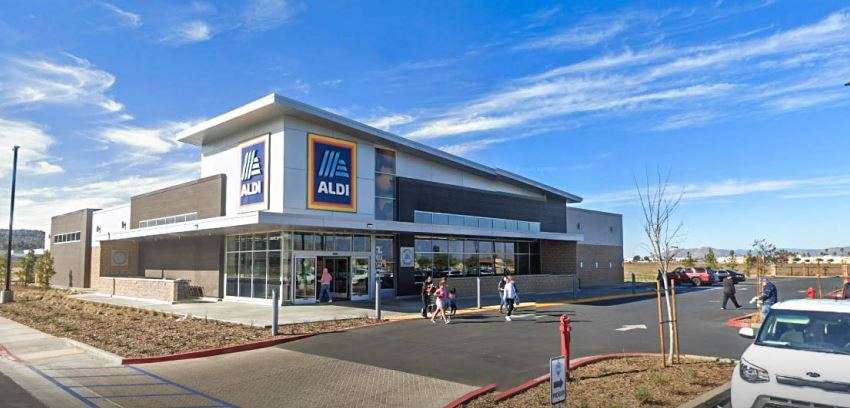
If I had to choose one retail category to hold through major technological disruption, grocery would be near the top of my list. Why? Because no matter what happens with AI, people still have to eat. Consumers can postpone buying a new television. They can keep their old furniture another five years. They can buy fewer clothes. They cannot stop buying groceries. That’s why I like tenants such as: Aldi, Walmart, Costco, Kroger, Safeway, Albertsons, Publix, H-E-B, Whole Foods, Trader Joe’s, Food Lion, Harris Teeter, Wegmans, Sprouts, Sam’s Club and BJ’s Wholesale Club. AI may actually help these companies. Warehouses can become more automated. Inventory management can improve. Checkout can become increasingly automated. AI can help predict demand and improve delivery. The grocery company may eventually need fewer employees, but it still needs locations close to its customers. Among grocery tenants, Aldi is particularly interesting to me. If AI creates significant unemployment or puts pressure on middle-class incomes, consumers may become more price conscious. A strong value-oriented grocer could benefit from that environment.
AI Resilience Rating: 10/10
McDonald’s, Chick-fil-A and Strong Drive-Through Restaurants
Restaurants deserve a closer look because AI could actually improve their economics. Labor is one of the largest expenses for restaurant operators. Imagine a future restaurant where AI handles ordering, much of the kitchen is automated, inventory is managed automatically and fewer employees are required. That sounds terrible from an employment standpoint. But think about it from the landlord’s perspective. If the restaurant can produce the same sales with significantly lower labor expenses, the tenant may become more profitable. And the restaurant still needs the real estate. That’s why I particularly like strong drive-through concepts such as: McDonald’s, Chick-fil-A, Chipotle, Taco Bell, Wendy’s, Starbucks, Dunkin’, Raising Cane’s, KFC, Popeyes, Whataburger, Jersey Mike’s and Wingstop. McDonald’s and Chick-fil-A would be among my favorites. Chipotle locations with Chipotlanes are also interesting because they combine digital ordering with physical pickup. But there is an important warning here. Don’t buy the logo. Buy the real estate. A McDonald’s at an excellent signalized intersection surrounded by strong demographics is very different from a McDonald’s on a secondary road in a declining market. If I am buying a 20-year lease, I want to know that someone else will want that corner someday.
AI Resilience Rating: 9/10
Automotive Service Could Be One of the Biggest Winners
This is another category I really like. AI can tell you that your tire needs replacing. It cannot replace the tire digitally. AI can diagnose damage to a car. The car still has to be physically repaired. That’s why automotive service may remain one of the more durable NNN categories. Tenants worth considering include: Valvoline, Jiffy Lube, Take 5 Oil Change, Mavis Discount Tire, Discount Tire, Firestone, Goodyear, Caliber Collision, Gerber Collision & Glass, Safelite and Meineke. Electric vehicles will change automotive maintenance, so investors should not assume every traditional auto-service concept will be equally successful. But EVs still need tires. Windshields still break. Vehicles still get damaged. That physical need is what makes the category attractive.
AI Resilience Rating: 9.5/10
AutoZone and O’Reilly Auto Parts
The same principle applies to automotive parts. A chatbot cannot replace a dead battery. That gives companies such as AutoZone, O’Reilly Auto Parts, NAPA Auto Parts and Advance Auto Parts a degree of protection from purely digital competition. Again, electric vehicles will change the products these companies sell over time. That risk needs to be considered. But the physical vehicle isn’t disappearing. Another advantage is the real estate itself. Many auto-parts stores occupy relatively simple retail buildings that can potentially be reused by another tenant.
AI Resilience Rating: 9/10
Home Depot, Lowe’s and Building Materials
AI can design a house. It can’t digitally fix your leaking roof. Homes will continue requiring paint, flooring, lumber, plumbing supplies, electrical equipment and repairs. That’s why I like companies such as: Home Depot, Lowe’s, Tractor Supply, Sherwin-Williams, Floor & Decor, Ace Hardware, Ferguson, Builders FirstSource and SiteOne Landscape Supply. These companies could become more efficient through AI and warehouse automation while continuing to require physical distribution networks. Home Depot and Lowe’s stores may increasingly function as both stores and local fulfillment centers.
AI Resilience Rating: 9/10
7-Eleven, Wawa, Sheetz and Convenience Stores
Convenience stores have something else that AI cannot create: a great corner. Think about a busy intersection with excellent visibility, easy access and tens of thousands of cars passing every day. That location has value independent of today’s technology. Tenants worth watching include: 7-Eleven, Wawa, Sheetz, Circle K, QuikTrip, RaceTrac, Casey’s and Murphy USA. The business model will evolve. We may have fewer cashiers. EV charging could become more important. Food service may grow. Checkout could become almost completely automated. But people will still value convenience. That’s why, with convenience-store NNN properties, I pay particular attention to the dirt underneath the lease. AI Resilience Rating: 9/10
Healthcare That Requires a Patient to Be There
Healthcare is going to be transformed by AI. AI may eventually perform a surprising amount of diagnostic and administrative work. But there is an important distinction between healthcare information and physical healthcare. Someone still has to perform a dental procedure. A patient still needs physical therapy. A dialysis patient still requires treatment. Blood still needs to be drawn. That’s why I like physical healthcare categories including: DaVita, Fresenius Medical Care, urgent care, dental clinics, imaging centers, surgery centers, Quest Diagnostics, Labcorp, physical therapy, orthopedic clinics and veterinary hospitals. The more the service requires the patient to physically visit the property, the more interesting the real estate becomes to me.
AI Resilience Rating: 9/10
Discount Retail Could Benefit From Economic Disruption
If AI produces enormous productivity but also causes significant job displacement, many households could become more price conscious. That could help value retailers. Potential NNN tenants include: Dollar General, Dollar Tree, Family Dollar, Five Below, Burlington, Ross Dress for Less, TJ Maxx and Marshalls. However, I would be selective. There is a big difference between selling necessities and selling discretionary merchandise. I would also look carefully at store sales, rent coverage, demographics and competition rather than buying a Dollar General simply because it has a long corporate lease.
AI Resilience Rating: 8/10
Industrial and Distribution May Need Fewer Workers—but More Automation
This is one of the most interesting contradictions of the AI economy. A warehouse could eventually employ far fewer people. But that doesn’t necessarily mean we need fewer warehouses. Robots need buildings too. Physical goods still need to be stored and moved. Amazon, Walmart, FedEx, UPS, grocery distributors, Home Depot and other major companies could operate increasingly automated distribution networks. For investors, the important factors will remain location, transportation access, building functionality and proximity to population centers.
AI Resilience Rating: 9/10
What NNN Properties Would I Be More Careful Buying?
If AI eliminates a significant number of jobs, I would be much more careful with businesses whose demand depends heavily on office employment or discretionary middle-class spending. That includes certain: Office buildings, office-supply stores, weaker department stores, marginal apparel retailers, weak casual-dining concepts, specialized entertainment properties and poorly located bank branches. That doesn’t mean these investments cannot make money. Price matters. At a sufficiently attractive basis, almost any usable real estate can become interesting. But I would demand a higher return for taking greater technological risk.
The Most Important Rule: Don’t Just Buy the Tenant
This is probably the most important point in this entire article. Imagine two McDonald’s properties. Both have the same corporate credit. Both have 18 years remaining. One sits on a signalized corner with 40,000 cars per day, strong demographics, multiple access points and numerous retailers surrounding it. The other sits on a secondary road in a stagnant market. Same tenant. Same lease term. Completely different investment. If McDonald’s leaves 18 years from now, I know which property I would rather own. AI makes this more important because technology can change much faster than a 20-year lease expires.
My AI Test Before Buying an NNN Property
Going forward, I believe investors should ask six questions before making a long-term NNN investment: Is the product necessary? Does the business still need a physical location? Can AI lower the tenant’s expenses without eliminating the location? Would another tenant want this property? Can the building easily be reused? Is today’s rent sustainable and reasonably close to market? When all six answers are favorable, the investment becomes much more interesting.
What Would My AI-Resistant NNN Portfolio Look Like?
If I were building a diversified NNN portfolio specifically for the next 10 to 20 years, I would favor: Grocery + automotive service + strong drive-through restaurants + healthcare + convenience stores + home improvement + auto parts + building materials + logistics + essential physical services. The common theme is simple. These businesses sell something or perform something that exists in the physical world. AI can help them. AI can make them more efficient. AI can reduce their labor expenses. But AI may have a much harder time eliminating their need for well-located real estate.
Final Thoughts
Nobody—including Elon Musk, economists, Wall Street or those of us in commercial real estate—knows exactly what AI will do to employment over the next 10 or 20 years. The optimistic scenario is enormous productivity, cheaper goods and services and entirely new industries. The more disruptive scenario involves millions of existing jobs disappearing faster than new jobs can replace them. As NNN investors, we don’t have to predict exactly which scenario happens. We need to buy real estate capable of surviving multiple scenarios. That’s why I believe the best NNN investments of the AI era will combine: A strong tenant. A necessary product or service. Sustainable rent. A long-term lease. And, most importantly, excellent underlying real estate. At Triple Net Investment Group, our goal has always been to help investors evaluate more than the cap rate. In a rapidly changing economy, that becomes even more important. Don’t just ask whether the tenant can pay the rent today. Ask whether consumers will still need the tenant—and whether another tenant will want the property—10 or 20 years from now. That is how NNN investors can think about protecting income, principal and long-term wealth in the age of artificial intelligence. This article is for informational purposes only and does not constitute investment, tax or legal advice. References to individual companies are examples and do not constitute recommendations or guarantees of future performance. Every property, tenant, lease, guaranty and market should be independently evaluated.